Moneyline wagers go bad when bullpens implode.
Fielder’s indifference leads to -1.5 wagers becoming 1-run wins.
A famed starting pitcher’s stuff resembles batting practice than ace form.
A gas can throws a gem.
Totals go over after many scoreless innings.
Totals go under after explosive frames to begin a game.
We’ve all seen it happen over and over again. The MLB season is a long, tough grind. Losses, as with any sport and maybe more viciously than the other major ones, are inevitable.
For me, I’m a terribly sore loser. It’s not the money that bothers me because I have a very disciplined money management system. Money is a way of keeping score. I just hate losing . . . at anything. We could have a thumb war and I’ll want to punch you in the face if I lost. However, as much as I hate losing, I don’t blow a gasket. Understanding losing is a part of betting assists me with coping during a losing day. I think we can all agree that losing makes us all a little bitter. Some more than others.
How do I deal with the tough days? I reach for another beer. Nothing cures the pain like a nice ice cold Heineken or another Rum and Coke.
I compare my rather calm behaviors to those who say the words “AGAIN?! I F***ING LOST AGAIN?!”. I can only imagine who they are getting their picks from, not us that';s for sure.
In real life, I’ve seen some angry drunks at the sports books. Some get overly aggressive against themselves, or overly aggressive against others. Some compound their drinking with other social habits. It’s a roller coaster and I thankfully do not meet the losing requirements to ride.
Losing days. Everyone has them.
How do you cope with the bad streaks? I'll tell you one way is to join us at West Coast Handicapping where losing is rare, definiterly not the norm. Sure, we're not perfect and don't claim to be because noboidy is. But, we are sitting at 70% for 2011 so far with our members netting over 750 units (each game is assigned 1*, 1.5* or 2*). Plus, with us you get 6-10 picks daily not 1 or 2 from the other guys. Get on board now with our 4th of July special of $149 for the rest of 2011 (Special ends 7/4 at 1pm) ONLY $149 FOR REST OF 2011

Wednesday, June 29, 2011
Thursday, June 16, 2011
Las Vegas bookmaker: The danger of moving lines
No one likes moving and bookmakers are no exception. Shifting lines once numbers are open for wagering is a major headache for sportsbook managers. The goal for some of the sharper gamblers is to eliminate the gamble from gambling and while that might sound like an oxymoron, arbitrage and middling are art forms only the best can execute with limited risk.
Even in the best middling opportunities basketball and football may present, odds are slim a game will fall between a narrow window allowing a gambler to win two bets. But through the influx of low juice books and shopping prices through town and offshore it’s become easier to wager a large chunk of your bankroll on both sides in a contest with limited risk and huge upside.
This approach to betting sports directly reflects a market investment strategy executed by Nassim Taleb referred to as the inevitability of disaster whereby you can’t always predict chance events and when they’ll occur but rather put yourself in a position to capitalize when they do unfold. Here is an example:
For illustration purposes, let’s use Team A and Team B.
The opening number for Team B is -1 vs. Team A.
Line moves throughout the day and closes Team A -2.
The astute gambler using arbitrage recognizes which direction the number is going to head and locks in wagers on Team A at +1 for 110 to win 100 and Team B +2 for 110 to win 100. While it may seem foolish to risk 220 with such a small window to middle the game, you can actually win by not only middling the game if Team A wins by 1 but also through siding the game if Team B wins by 1 or loses by 2, meaning you’d win one of the wagers and push the other.
What’s been done in this scenario is the gambler is only risking 10 bucks in juice for the opportunity to win 200 if the game falls in his perfect scenario. Risk is reduced even further with shorter juice but assuming it was a .20 cent line (most common in Vegas for pointspread wagering -110/-110) a gambler would need to hit 1 out of 20 to break even with anything above that success rate serving as pure profit and emphasis on getting the best numbers for largest middle opportunities.
Baseball provides an even better prospect for this type of wagering through moneyline manipulation specifically in a 10-cent line. Unlike betting football or basketball against the spread, if you can gauge where a moneyline’s going to move, you can consistently lock in profits regardless of the actual outcome because you’ve created a scalp.
The scalp allows the gambler to lay a price, say -175, and as the price climbs throughout the day he can take back any price of +177 and begin making a small return on investment.
One point I want to get across through all of this is that just because these opportunities exist in the betting marketplace, this wagering strategy is not easy to execute. If you happen to bet the wrong side initially and the line moves against you, prospects for arbitrage are thrown out the window.
GET 1 MONTH OF WINNING SPORTS PICKS FOR ONLY $99 (Guaranteed profit)
Even in the best middling opportunities basketball and football may present, odds are slim a game will fall between a narrow window allowing a gambler to win two bets. But through the influx of low juice books and shopping prices through town and offshore it’s become easier to wager a large chunk of your bankroll on both sides in a contest with limited risk and huge upside.
This approach to betting sports directly reflects a market investment strategy executed by Nassim Taleb referred to as the inevitability of disaster whereby you can’t always predict chance events and when they’ll occur but rather put yourself in a position to capitalize when they do unfold. Here is an example:
For illustration purposes, let’s use Team A and Team B.
The opening number for Team B is -1 vs. Team A.
Line moves throughout the day and closes Team A -2.
The astute gambler using arbitrage recognizes which direction the number is going to head and locks in wagers on Team A at +1 for 110 to win 100 and Team B +2 for 110 to win 100. While it may seem foolish to risk 220 with such a small window to middle the game, you can actually win by not only middling the game if Team A wins by 1 but also through siding the game if Team B wins by 1 or loses by 2, meaning you’d win one of the wagers and push the other.
What’s been done in this scenario is the gambler is only risking 10 bucks in juice for the opportunity to win 200 if the game falls in his perfect scenario. Risk is reduced even further with shorter juice but assuming it was a .20 cent line (most common in Vegas for pointspread wagering -110/-110) a gambler would need to hit 1 out of 20 to break even with anything above that success rate serving as pure profit and emphasis on getting the best numbers for largest middle opportunities.
Baseball provides an even better prospect for this type of wagering through moneyline manipulation specifically in a 10-cent line. Unlike betting football or basketball against the spread, if you can gauge where a moneyline’s going to move, you can consistently lock in profits regardless of the actual outcome because you’ve created a scalp.
The scalp allows the gambler to lay a price, say -175, and as the price climbs throughout the day he can take back any price of +177 and begin making a small return on investment.
One point I want to get across through all of this is that just because these opportunities exist in the betting marketplace, this wagering strategy is not easy to execute. If you happen to bet the wrong side initially and the line moves against you, prospects for arbitrage are thrown out the window.
GET 1 MONTH OF WINNING SPORTS PICKS FOR ONLY $99 (Guaranteed profit)


Tuesday, June 14, 2011
Can LeBron Transform From Choker To Champ? A Sport Psychologist Has A Game Plan
The Decision has led to The Derision, and many are now calling LeBron James a choker.
And is there a way he can confront this problem and overcome it?
There are answers, and they go all the way back to the 1989 Stanley Cup Final. One of the Calgary Flames, coming back to the dressing room right before the opening faceoff in Game 1, turned to the team's sport psychologist and made a confession: "I'm scared."
The psychologist was named Hap Davis, and he has spent more than a generation examining why athletes succumb to pressure. He thinks he's found an answer, and it sheds light on both LeBron James' poor play in and Dirk Nowitzki's emotional response to winning in a whole new way.
In moments of fear, the human body produces cortisol, which helps its fight-or-flight mechanism. When you hear a story about a mother lifting a stalled car off her child to save his life, that's cortisol at work. But cortisol is not what a great athlete needs in a defining moment. In fact, cortisol may get in the way of an essential ingredient for athletic performance: Testosterone.
GET 1 MONTH OF WINNING SPORTS PICKS FOR ONLY $99 (Guaranteed profit)
"That's what comes with ability to stay in the moment -- frontal cortex activation, motor cortex activation and elevation in testosterone," Davis says.
Translation: Athletes who "stay focused" (to use a cliché) keep producing testosterone, which stimulates the part of the brain wired for motor skills such as shooting or dribbling.
Sunday, June 12, 2011
Friday, June 10, 2011
THE REAL STORY BEHIND LEBRON'S BREAKDOWN IN CRUNCH TIME...
This is starting to get real ugly for Lebron. He mentally is not in the game. You can see it in his eyes, he has bailed on his teammates.
Let me take you back to last year when Lebron found out that Delonte had slept with his mom. His performance went on a downward spiral and he never recovered. Well, I have a very reliable source who clubs and drinks with all of the athletes that come through Orlando. He was all over the Tiger Woods issue and knew what all happened with Tiger prior to it being released publicly. My buddy has a place in Orlando, Lake Nona to be exact, and he lives among some athletes that live there in Orlando. Needless to say he golfs, drinks, and parties with some of these athlketes. So when word got to him while at the bar last night, he called me. Word got out while drinking with friends, that Rashard Lewis slept with Lebrons girl while visiting South Beach. Not sure how it all went down, but the guys he was drinking with all bashed Rashard for being a piece of shit. Take it for what it's worth, but this will all come out just like Delonte and that fiasco did as well.
This is personal, and it affected Lebron last year with his mom, and now this year on the largest stage with his woman. It's affecting him all around. Look at how passive, and how clueless he looks. Of course Lebron speaks like nothing is wrong, that's what he's suppose to do to get family out of the spotlight.
Let me take you back to last year when Lebron found out that Delonte had slept with his mom. His performance went on a downward spiral and he never recovered. Well, I have a very reliable source who clubs and drinks with all of the athletes that come through Orlando. He was all over the Tiger Woods issue and knew what all happened with Tiger prior to it being released publicly. My buddy has a place in Orlando, Lake Nona to be exact, and he lives among some athletes that live there in Orlando. Needless to say he golfs, drinks, and parties with some of these athlketes. So when word got to him while at the bar last night, he called me. Word got out while drinking with friends, that Rashard Lewis slept with Lebrons girl while visiting South Beach. Not sure how it all went down, but the guys he was drinking with all bashed Rashard for being a piece of shit. Take it for what it's worth, but this will all come out just like Delonte and that fiasco did as well.
This is personal, and it affected Lebron last year with his mom, and now this year on the largest stage with his woman. It's affecting him all around. Look at how passive, and how clueless he looks. Of course Lebron speaks like nothing is wrong, that's what he's suppose to do to get family out of the spotlight.
Pocono 500: NASCAR Betting Preview and FREE Picks
This week’s number is 13.
The Pocono 500 marks 13 races down and 13 to go in NASCAR’s regular season, which consists of 26 races prior to the 10-race Chase for the Championship.
Sunday kicks off the second half of the schedule at the track known as the Tricky Triangle - Pocono Raceway. With its three unique corners and three straights of varying lengths, it’s not exactly a superspeedway, but it’s not really a road course. Pocono is one of the most challenging tracks on the circuit and no one has shown a better ability to step up to that challenge than this week’s favorite, Carl Edwards.
Edwards is in the midst of a career-best season and comes into Pocono leading the championship standings by 40 points - the largest lead all season. And he’s well aware that while leading the points will get him into the Chase, in just 13 races all that will really matter are wins. Edwards has two wins here, his first coming in his first career start and he has finished in the Top 3 in three of the last five races.
“I really like racing at Pocono,” Edwards told reporters. “The first time I ran there I won so it’s been a favorite ever since. It is a very difficult track, both mentally and physically, and it taxes every part of the car as well. We’re going into Pocono with a big point lead so we are definitely going for the win. With a cushion in the points we are able to gamble a bit more and I can drive more aggressively to go for the win.”
Don’t count Denny Hamlin out of the mix, though. After being off everyone’s radar for most of the season, Hamlin has been showing steady improvement including a second-place finish at Kansas last week. He heads to Pocono with a ton of confidence and with four wins here - the most of any active driver. He’s the defending winner of this race and would like nothing more than getting back in the win column.
Like Hamlin, Tony Stewart has been uncharacteristically quiet this season. But he also heads to Pocono with a record that can’t be ignored. In the last five races here, Stewart has finished inside the Top 3 in four events, including a win two short years ago. Stewart could easily step up to the plate and steal the spotlight Sunday.
Jimmie Johnson and Kevin Harvick make up this week’s prime-time matchup. Sure Johnson has two wins here but those came seven years ago when he completed a season sweep in 2004. Although he could run up front Sunday, his recent stats don’t bode well for the No. 48 car. Harvick on the other hand has never won at Pocono but has been surprising at Pocono on more than one occasion. With two Top-5 finishes here last season, Harvick gets the nod in this matchup.
Kyle Busch and Matt Kenseth have never won at Pocono either, but both are having stellar seasons and hope to continue that trend this weekend. However, neither have records at Pocono that make them favorites for a checkered flag. While Kenseth has put together some great runs this season, Busch should come out ahead in this matchup.
Bottom line: The June 2005 race was won by Carl Edwards from the 29th starting position, which is the deepest a race winner has started in the field.
Favorites:
Carl Edwards (+700)
Denny Hamlin (+400)
Spoiler:Tony Stewart (+1,000)
GET 1 MONTH OF WINNING SPORTS PICKS FOR ONLY $99 (Guaranteed profit)
The Pocono 500 marks 13 races down and 13 to go in NASCAR’s regular season, which consists of 26 races prior to the 10-race Chase for the Championship.
Sunday kicks off the second half of the schedule at the track known as the Tricky Triangle - Pocono Raceway. With its three unique corners and three straights of varying lengths, it’s not exactly a superspeedway, but it’s not really a road course. Pocono is one of the most challenging tracks on the circuit and no one has shown a better ability to step up to that challenge than this week’s favorite, Carl Edwards.
Edwards is in the midst of a career-best season and comes into Pocono leading the championship standings by 40 points - the largest lead all season. And he’s well aware that while leading the points will get him into the Chase, in just 13 races all that will really matter are wins. Edwards has two wins here, his first coming in his first career start and he has finished in the Top 3 in three of the last five races.
“I really like racing at Pocono,” Edwards told reporters. “The first time I ran there I won so it’s been a favorite ever since. It is a very difficult track, both mentally and physically, and it taxes every part of the car as well. We’re going into Pocono with a big point lead so we are definitely going for the win. With a cushion in the points we are able to gamble a bit more and I can drive more aggressively to go for the win.”
Don’t count Denny Hamlin out of the mix, though. After being off everyone’s radar for most of the season, Hamlin has been showing steady improvement including a second-place finish at Kansas last week. He heads to Pocono with a ton of confidence and with four wins here - the most of any active driver. He’s the defending winner of this race and would like nothing more than getting back in the win column.
Like Hamlin, Tony Stewart has been uncharacteristically quiet this season. But he also heads to Pocono with a record that can’t be ignored. In the last five races here, Stewart has finished inside the Top 3 in four events, including a win two short years ago. Stewart could easily step up to the plate and steal the spotlight Sunday.
Jimmie Johnson and Kevin Harvick make up this week’s prime-time matchup. Sure Johnson has two wins here but those came seven years ago when he completed a season sweep in 2004. Although he could run up front Sunday, his recent stats don’t bode well for the No. 48 car. Harvick on the other hand has never won at Pocono but has been surprising at Pocono on more than one occasion. With two Top-5 finishes here last season, Harvick gets the nod in this matchup.
Kyle Busch and Matt Kenseth have never won at Pocono either, but both are having stellar seasons and hope to continue that trend this weekend. However, neither have records at Pocono that make them favorites for a checkered flag. While Kenseth has put together some great runs this season, Busch should come out ahead in this matchup.
Bottom line: The June 2005 race was won by Carl Edwards from the 29th starting position, which is the deepest a race winner has started in the field.
Favorites:
Carl Edwards (+700)
Denny Hamlin (+400)
Spoiler:Tony Stewart (+1,000)
GET 1 MONTH OF WINNING SPORTS PICKS FOR ONLY $99 (Guaranteed profit)
MLB's Top 5 Teams in One Run Games
Do you have to be good to be lucky or lucky to be good? Baseball bettors don’t believe in lucky, but you have to think there is an element of chance that comes into play during one-run games.
Of course, the makeup of some clubs is better suited for holding or gaining leads late in games. Here’s a look at the Top 5 teams in one-run games heading into Thursday’s action:
1) San Francisco Giants (17-9 in one-run games)
Last year, the Twins led the league in one-run wins with 31. The Giants have 17 and we’ve got more than two thirds of the season left.
The defending World Series champions own a stable of quality arms with swing-and-miss stuff in their starting rotation, but the relief staff is getting the job done too. The Giants possess the sixth best bullpen ERA in the majors (3.23) and sport a 15-6 win-loss record.
Before we shower San Fran with too much praise, keep in mind that the club is actually down over 10 units on the runline. That means a lot of those one-run wins were probably games in which it was favored to win.

2) Arizona Diamondbacks (14-8)
The Diamondbacks had won eight straight one-run games before falling 3-2 to the Pirates Wednesday night. Arizona has been all over the map but the club does consistently touch a lot of bases late in games. The D-backs are tied for the third-best slugging percent (.402) from the seventh inning on.
Arizona’s bullpen is in the bottom third of the league in ERA and its other numbers aren’t all that flattering either. But Kirk Gibson’s boys are in good shape going into the ninth with a short lead. Closer J.J. Putz is money in the bank in the final frame with 17 saves in 19 opportunities.
3) Cleveland Indians (12-8)
The Indians may be coming back down to earth, but they’re still coming up on the right side of a lot of close contests. Cleveland is 6-2 in one-run games since May 4.
The secret to the Indians’ success: Coming up with a hit with runners in scoring position. Cleveland bats .281 with RISP compared to just .251 with bases empty.
4) Baltimore Orioles (9-5)
The O’s aren’t involved in as many nail biters but they tend to come through in the clutch. Buck Showalter’s club is more selective at the dish in late-game scenarios. Their on-base percentage jumps from.306 in the first six innings to .333 in the seventh inning on.
5) Philadelphia Phillies (10-7)
What’s not to like about the Phillies? They’ve got an All-Star rotation and the third-best bullpen in the big leagues. Philly is 20-1 in save opportunities this season and that’s without a healthy Brad Lidge. Imagine how dominant the Phillies will be in late innings once Ryan Madison returns to the set-up role and resumes ninth-inning duties.
GET 1 MONTH OF WINNING SPORTS PICKS FOR ONLY $99 (Guaranteed profit)
Of course, the makeup of some clubs is better suited for holding or gaining leads late in games. Here’s a look at the Top 5 teams in one-run games heading into Thursday’s action:
1) San Francisco Giants (17-9 in one-run games)
Last year, the Twins led the league in one-run wins with 31. The Giants have 17 and we’ve got more than two thirds of the season left.
The defending World Series champions own a stable of quality arms with swing-and-miss stuff in their starting rotation, but the relief staff is getting the job done too. The Giants possess the sixth best bullpen ERA in the majors (3.23) and sport a 15-6 win-loss record.
Before we shower San Fran with too much praise, keep in mind that the club is actually down over 10 units on the runline. That means a lot of those one-run wins were probably games in which it was favored to win.
2) Arizona Diamondbacks (14-8)
The Diamondbacks had won eight straight one-run games before falling 3-2 to the Pirates Wednesday night. Arizona has been all over the map but the club does consistently touch a lot of bases late in games. The D-backs are tied for the third-best slugging percent (.402) from the seventh inning on.
Arizona’s bullpen is in the bottom third of the league in ERA and its other numbers aren’t all that flattering either. But Kirk Gibson’s boys are in good shape going into the ninth with a short lead. Closer J.J. Putz is money in the bank in the final frame with 17 saves in 19 opportunities.
3) Cleveland Indians (12-8)
The Indians may be coming back down to earth, but they’re still coming up on the right side of a lot of close contests. Cleveland is 6-2 in one-run games since May 4.
The secret to the Indians’ success: Coming up with a hit with runners in scoring position. Cleveland bats .281 with RISP compared to just .251 with bases empty.
4) Baltimore Orioles (9-5)
The O’s aren’t involved in as many nail biters but they tend to come through in the clutch. Buck Showalter’s club is more selective at the dish in late-game scenarios. Their on-base percentage jumps from.306 in the first six innings to .333 in the seventh inning on.
5) Philadelphia Phillies (10-7)
What’s not to like about the Phillies? They’ve got an All-Star rotation and the third-best bullpen in the big leagues. Philly is 20-1 in save opportunities this season and that’s without a healthy Brad Lidge. Imagine how dominant the Phillies will be in late innings once Ryan Madison returns to the set-up role and resumes ninth-inning duties.
GET 1 MONTH OF WINNING SPORTS PICKS FOR ONLY $99 (Guaranteed profit)
Wednesday, June 8, 2011
HOW WILL MARK JACKSON HANDLE THE WARRIORS?

Which is what makes Golden State’s choice of Jackson not necessarily wrong, but curious … if the Warriors wanted a young, media-friendly, minority coach with a great mind for the game and a lot of potential, well … they just fired him a couple of months back.
About the only difference between Smart and Jackson – both are 46, bright, and were contemporaries as college players and pros – is that Smart has a qualification on his resume that Jackson doesn’t – NBA coaching experience.

Smart led a talent-challenged, rag-tag Warriors club to 36 wins this past season, a 10-game improvement over the mess he inherited from Don Nelson.
As I blogged in this space a few weeks back, that near-miracle alone against a difficult lame-duck backdrop should have been enough to earn Smart the job.
Instead, new owners Joe Lacob and Peter Guber stated when they fired Smart they were interested first in bringing in their own guy (understandable to some degree) and, yes, they thought they could do better than Smart right now.
GET 1 WEEK OF WINNING SPORTS PICKS FOR ONLY $49
Is Lebro James tired, a diva, a cry baby or all 3?
It’s been an especially long year for Miami Heat – LeBron James in particular.
Starting with the circus surrounding his signing with the Heat last summer and spanning into Game 5 of the NBA Finals Thursday, James has been going non-stop since he dropped the bomb on the NBA last July.
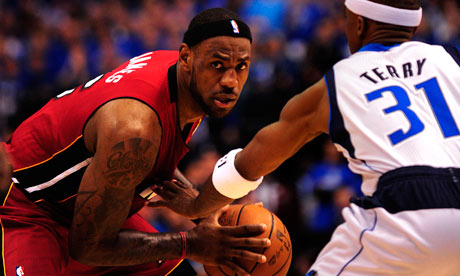
It seems, looking at his performances versus the Dallas Mavericks, that LeBron may be running out of gas. He’s far less active on the offensive end compared to the previous series and mustered just 11 shots (hitting only three of them) in Game 4’s loss in Dallas Tuesday.
James is 26 for 56 from the floor in the finals, averaging just 14 shots over those four contests. Looking at the previous two series, it seems he’s sucking wind as the finals get into - to take a page from boxing - the championship rounds.
He was 42 for 94 in the five games versus the Chicago Bulls in the Eastern Conference finals, averaging just under 19 shots a game. And, against the Boston Celtics in the second round, James went 51 for 108 during the five-game series, hoisting an average of 21.6 shots per outing.
Credit must be given to the Mavericks and their defense, which is the main reason they’ve been able to get over the hump in the Western Conference and complete so many miraculous comebacks this postseason. But scorers like LeBron don’t dip this low just because of guys like Shawn Marion and Deshawn Stevenson.
An elite scorer should score as many points from the field as they have attempts. When you factor in the ability to get to the foul line and knock down free throws, James production is dismal. He only went to the line four times in Game 4, hitting just two of those freebies.
James and the Heat have denied that their star player is tired or injured, with head coach Erik Spoelstra stating, “No, he’s physically fine. I just have to do a better job of making sure he’s in positions where he can be aggressive.”
But you can only buy the “slumping” excuse for so long, and as the series draws out, a long, long season, which unofficially started July 9, will continue to wear on the one of the game’s greatest players.
The big question for James and Miami is what will happen first: Four wins or an empty tank?
Starting with the circus surrounding his signing with the Heat last summer and spanning into Game 5 of the NBA Finals Thursday, James has been going non-stop since he dropped the bomb on the NBA last July.
It seems, looking at his performances versus the Dallas Mavericks, that LeBron may be running out of gas. He’s far less active on the offensive end compared to the previous series and mustered just 11 shots (hitting only three of them) in Game 4’s loss in Dallas Tuesday.
James is 26 for 56 from the floor in the finals, averaging just 14 shots over those four contests. Looking at the previous two series, it seems he’s sucking wind as the finals get into - to take a page from boxing - the championship rounds.
He was 42 for 94 in the five games versus the Chicago Bulls in the Eastern Conference finals, averaging just under 19 shots a game. And, against the Boston Celtics in the second round, James went 51 for 108 during the five-game series, hoisting an average of 21.6 shots per outing.
Credit must be given to the Mavericks and their defense, which is the main reason they’ve been able to get over the hump in the Western Conference and complete so many miraculous comebacks this postseason. But scorers like LeBron don’t dip this low just because of guys like Shawn Marion and Deshawn Stevenson.
An elite scorer should score as many points from the field as they have attempts. When you factor in the ability to get to the foul line and knock down free throws, James production is dismal. He only went to the line four times in Game 4, hitting just two of those freebies.
James and the Heat have denied that their star player is tired or injured, with head coach Erik Spoelstra stating, “No, he’s physically fine. I just have to do a better job of making sure he’s in positions where he can be aggressive.”
But you can only buy the “slumping” excuse for so long, and as the series draws out, a long, long season, which unofficially started July 9, will continue to wear on the one of the game’s greatest players.
The big question for James and Miami is what will happen first: Four wins or an empty tank?
BELMONT STAKES STRATEGY AND PICK

The Kentucky Derby features a ridiculously-large field over the longest distance the horses have ever run. Distance and field size are less of a factor in the Preakness, but now the top horses have to run on just two weeks rest, likely for the first time.
In the Belmont, horses have to stretch out to a marathon distance and do it over the longest track in the country.
The Belmont isn’t as tough as the Kentucky Derby, but it’s easily the second hardest to handicap. There are two unique factors you absolutely must consider in the Belmont if you want to make winning bets:
Distance
A mile and a half is a very long race for these horses. Three year olds are not fully mature horses, so asking them to run a marathon distance is a big test and a lot of horses just aren’t up to it. Before you bet on any horse in this race you have to be confident it will still be on four feet and moving forward at the end.
There are two basic ways to quickly gain that confidence. First, is he bred to run a long way? Pedigree analysis is complex and beyond most people, but there is a quick short cut: If the sire or damsire won a Triple Crown race, a Breeders’ Cup race that wasn’t at a spring distance, or another major race then the horse is probably reasonably ready for the challenge.
Second, how has it finished in its longest races? If the horse has been gaining ground at the end of races then it was likely fresher than other horses, and that’s a good sign. If it was just barely holding on or even losing ground, then he could be in real trouble when the race gets longer.
Jockey experience
The Belmont track is a mile and a half long. Most other major tracks are a mile long. Basic geometry skills will tell you that a longer oval will have longer turns and longer stretches.
If a jockey doesn’t know the track well, then they can make the critical error of making their move where he would on any other track. If the horse moves around the final turn it finds itself with a much longer stretch than normal to deal with and it can burn out badly.
It doesn’t matter how good a jockey is - if they don’t know the track they’re a liability. Calvin Borel is a perfect example of this. In 2009, he had won the Derby and the Preakness and was looking to complete the personal Triple Crown aboard Mine That Bird. He didn’t know the track, but made the terrible decision not to ride in any races the days before the Belmont. He made a horribly-timed move in the Belmont and gave his horse no chance of success. He was the hottest jockey on the planet, but the track didn’t care.
GET A ONE WEEK SUBSCRIPTION OF SPORTS PICKS INCLUDING THE BELMONT STAKES FOR ONLY $49
Boston Red Sox at New York Yankees

THE STORY: The Boston Red Sox have crawled all the way up from the American League East basement to regain first place in the division. They’ve gone through their rivals to do so. Boston will try to improve to 7-1 against the New York Yankees on Wednesday night in the Bronx, where the Sox have yet to lose this season. That streak could very well continue after Mark Teixeira exited Tuesday’s 6-4 loss with a bruised right knee and is doubtful for Wednesday. The slugger had been New York’s hottest hitter, clocking seven home runs in his previous 10 games.
TV: 7:05 p.m. ET, NESN, YES Network
PITCHING MATCHUP: RH Tim Wakefield (2-1, 4.40) vs. RH A.J. Burnett (6-3, 3.86).
Wakefield fills in for Clay Buchholz, who had his scheduled start pushed back to Friday due to a sore back. The veteran knuckleballer allowed four earned runs on seven hits with four strikeouts in six innings for a no-decision June 1 vs. the Chicago White Sox. He has, however, won his only road start of the season, going seven strong in a 6-3 win at Detroit late last month. Wakefield is making his 16th start in the Bronx but his first at new Yankee Stadium. He is 11-17 with a 4.90 ERA all-time against New York, which has been led by Robinson Cano’s .304 average and 12 RBIs off Wakefield. Nick Swisher, meanwhile, is just 3-for-15.
Burnett is coming off two straight starts in which he allowed just two earned runs. He’s regained confidence in a curveball that that was primarily responsible for his 3-0 start. That confidence comes in handy in a month in which he went 0-5 with an 11.35 ERA in 2010, ultimately derailing his season. The righthander has yet to face Boston his season but does own a 5-3 record with a 4.79 ERA in 15 starts. Dustin Pedroia is hitting .300 off him with 10 walks in 40 plate appearances and Carl Crawford is hitting .315 with one homer in 54 at-bats.
ABOUT THE RED SOX (34-26, -4.43 units, 28-25-7 O/U): Boston’s high-priced lineup has lived up to its hype in the last month, leading the majors with a .295 average and 155 runs. Adrian Gonzalez scored two of those in Tuesday’s win and recorded his league-leading 51st RBI. The surge can be credited as much to the big boppers as to contact hitters such as Jacoby Ellsbury. The Sox are 12 games above .500 since the centerfielder switched to the leadoff role April 22. The speedster leads the league with 19 stolen bases and 17 doubles since then.
ABOUT THE YANKEES (33-25, 0.20 units, 26-27-5 O/U ): New York’s 88 home runs still leads the majors by a comfortable margin of 16, but there’s no denying the bigger bats are coming back down to earth. Alex Rodriguez has just one home run in his last 14 games, while Robinson Cano has four long balls since tagging eight alone in April. The Yankees, though, are still quite capable of winning by manufacturing runs, they just need production across the whole lineup. That lineup could very well include Jorge Posada the rest of this series. The usual designated hitter went 3-for-3 filling in for Teixeira at first base Tuesday and picked up his first hits off a lefthander after going 0-for-27 to start the season.
Saturday, June 4, 2011
Game 3 NBA Finals could decide series.........
Game 3 of the NBA Finals on Sunday in Dallas could go a long way toward deciding the NBA champion.
When the Mavericks staged an improbable rally for a 95-93 win at Miami on Thursday, they evened the series at one game apiece to set up a pivotal Game 3. Dallas is a 2.5-point home favorite for Game 3 Sunday.

Since the NBA installed the 2-3-2 format for the Finals in 1985, the conference champions have previously split the first two games 11 times. In every one of those situations, the team that won Game 3 has gone on to win the series, most recently in last year's Finals.
In 2010, the Los Angeles Lakers won the opener at home but lost Game 2 to the Boston Celtics. They bounced back to win Game 3 in Boston and went on to win the series in seven games.
When the Mavericks and Heat met in the 2006 Finals, Dallas won the first two games at home before Miami won the next four to claim the title.
Bookmaker.com has Miami priced at -159 to win the NBA title while Dallas is set at +115 heading into Game 3 Sunday.
Get our winning NBA pick for game 3 plus 6 winning MLB picks for Sunday all for only $25
When the Mavericks staged an improbable rally for a 95-93 win at Miami on Thursday, they evened the series at one game apiece to set up a pivotal Game 3. Dallas is a 2.5-point home favorite for Game 3 Sunday.
Since the NBA installed the 2-3-2 format for the Finals in 1985, the conference champions have previously split the first two games 11 times. In every one of those situations, the team that won Game 3 has gone on to win the series, most recently in last year's Finals.
In 2010, the Los Angeles Lakers won the opener at home but lost Game 2 to the Boston Celtics. They bounced back to win Game 3 in Boston and went on to win the series in seven games.
When the Mavericks and Heat met in the 2006 Finals, Dallas won the first two games at home before Miami won the next four to claim the title.
Bookmaker.com has Miami priced at -159 to win the NBA title while Dallas is set at +115 heading into Game 3 Sunday.
Get our winning NBA pick for game 3 plus 6 winning MLB picks for Sunday all for only $25
NHL Preview: Bruins vs Canucks
Boston Bruins at Vancouver Canucks (-188, 5)
Vancouver leads series 1-0
THE STORY: The Vancouver Canucks took a bite out of the Boston Bruins in more ways than one in the opener of the Stanley Cup final. The Canucks seized the upper hand Wednesday, earning a thrilling 1-0 win in what looks like it might be a defensive-minded series. Vancouver looks to go up 2-0 in the best-of-seven when it hosts Game 2 Saturday night at Rogers Arena.
TV: 8 p.m. ET, NBC, CBC, RDS
ABOUT THE CANUCKS: With much of the attention from Game 1 drawn to Vancouver forward Alex Burrows' chomp on the gloved finger of Bruins forward Patrice Bergeron, it was Canucks netminder Roberto Luongo who deserved the most publicity. The much-maligned goalie stopped all 36 shots he faced to win Round 1 of his duel with fellow Vezina Trophy nominee Tim Thomas. Since being benched for the start of Game 6 in the Canucks' first-round tilt with Chicago, Luongo has gone 10-4 with a 1.75 goals-against average, a .942 save percentage and two shutouts. If he continues performing this well, the Bruins will be hard-pressed to keep pace.
ABOUT THE BRUINS: Boston managed to reach its first Stanley Cup final since 1990 despite a playoff-long struggle with the man advantage. The troublesome power play was a factor in Game 1, as the Bruins failed to convert on both a two-man advantage and a four-minute 5-on-4 and finished 0-for-5 in the game. When asked about improving the power play, Bergeron said: "We have to. We have to find a way to score more goals. On the power play, it’s one key area that we need to fix and be better, especially having a five-on-three and a four-minute five-on-four, you’ve got to find a way." The Bruins' power play is at just seven per cent for the playoffs.
WHO'S HOT/WHO'S NOT: Luongo and Thomas are the hottest players going for their respective teams. Luongo has turned aside 90 of 92 shots over the past two games while Thomas has allowed just one goal on his last 58 shots faced.
SPECIAL TEAMS: Vancouver also went 0-for-5 on the power play in Game 1 to dip to 25.8 percent for the postseason. Boston has converted just one of its last 20 man-advantage opportunities.
TRENDS:
* Under is 4-0-1 in the last five meetings.
* Bruins are 0-4 in their last four after allowing two goals or less in their previous game.
* Canucks are 5-0 in their last five playoff games as favorites.
* Over is 6-1 in Bruins' last seven after allowing two goals or less in their previous game.
* Under is 13-3-2 in Canucks' last 18 after scoring two goals or less in their previous game.
LAST WORD: Vancouver defenseman Dan Hamhuis is questionable for Game 2 after suffering a lower-body injury in Wednesday's opener. He was injured shortly after sending Milan Lucic head-over-heels with a hip check near the team benches.
Vancouver leads series 1-0
THE STORY: The Vancouver Canucks took a bite out of the Boston Bruins in more ways than one in the opener of the Stanley Cup final. The Canucks seized the upper hand Wednesday, earning a thrilling 1-0 win in what looks like it might be a defensive-minded series. Vancouver looks to go up 2-0 in the best-of-seven when it hosts Game 2 Saturday night at Rogers Arena.
TV: 8 p.m. ET, NBC, CBC, RDS
ABOUT THE CANUCKS: With much of the attention from Game 1 drawn to Vancouver forward Alex Burrows' chomp on the gloved finger of Bruins forward Patrice Bergeron, it was Canucks netminder Roberto Luongo who deserved the most publicity. The much-maligned goalie stopped all 36 shots he faced to win Round 1 of his duel with fellow Vezina Trophy nominee Tim Thomas. Since being benched for the start of Game 6 in the Canucks' first-round tilt with Chicago, Luongo has gone 10-4 with a 1.75 goals-against average, a .942 save percentage and two shutouts. If he continues performing this well, the Bruins will be hard-pressed to keep pace.
ABOUT THE BRUINS: Boston managed to reach its first Stanley Cup final since 1990 despite a playoff-long struggle with the man advantage. The troublesome power play was a factor in Game 1, as the Bruins failed to convert on both a two-man advantage and a four-minute 5-on-4 and finished 0-for-5 in the game. When asked about improving the power play, Bergeron said: "We have to. We have to find a way to score more goals. On the power play, it’s one key area that we need to fix and be better, especially having a five-on-three and a four-minute five-on-four, you’ve got to find a way." The Bruins' power play is at just seven per cent for the playoffs.
WHO'S HOT/WHO'S NOT: Luongo and Thomas are the hottest players going for their respective teams. Luongo has turned aside 90 of 92 shots over the past two games while Thomas has allowed just one goal on his last 58 shots faced.
SPECIAL TEAMS: Vancouver also went 0-for-5 on the power play in Game 1 to dip to 25.8 percent for the postseason. Boston has converted just one of its last 20 man-advantage opportunities.
TRENDS:
* Under is 4-0-1 in the last five meetings.
* Bruins are 0-4 in their last four after allowing two goals or less in their previous game.
* Canucks are 5-0 in their last five playoff games as favorites.
* Over is 6-1 in Bruins' last seven after allowing two goals or less in their previous game.
* Under is 13-3-2 in Canucks' last 18 after scoring two goals or less in their previous game.
LAST WORD: Vancouver defenseman Dan Hamhuis is questionable for Game 2 after suffering a lower-body injury in Wednesday's opener. He was injured shortly after sending Milan Lucic head-over-heels with a hip check near the team benches.
Thursday, June 2, 2011
Nowitzki's finger, non-factor.....
Dallas Mavericks superstar Dirk Nowitzki tore a tendon in his left middle finger in Tuesday's NBA Finals opener but is not expected to miss any action.
Nowitzki suffered the injury in the fourth quarter of Dallas' 92-84 loss at Miami while attempting to make a defensive play against Heat forward Chris Bosh.
"Bosh got a bounce pass and stepped in," Nowitzki said. "I thought I stripped him clean. Then I kind of looked down and I couldn't straighten my finger out anymore. I have to wear a splint probably the rest of the playoffs."
After the injury, Nowitzki made two free throws, a jumper and two more free throws before missing a short shot. He finished with 27 points, shooting 7-of-18 from the field and 12-of-12 from the line.
"It won't affect him," Heat superstar LeBron James said. "He's still going to be great. He's still going to be Dirk."
Nowitzki practiced with a splint on his finger Tuesday, but hopes to be able to play without it in Game 2.
"I have this splint on for now," Nowitzki told reporters. "I think we're going to play around with some other stuff. Try tape, or try a splint from the back so I can feel the ball and not lose grip of the ball.”
Nowitzki suffered the injury in the fourth quarter of Dallas' 92-84 loss at Miami while attempting to make a defensive play against Heat forward Chris Bosh.
"Bosh got a bounce pass and stepped in," Nowitzki said. "I thought I stripped him clean. Then I kind of looked down and I couldn't straighten my finger out anymore. I have to wear a splint probably the rest of the playoffs."
After the injury, Nowitzki made two free throws, a jumper and two more free throws before missing a short shot. He finished with 27 points, shooting 7-of-18 from the field and 12-of-12 from the line.
"It won't affect him," Heat superstar LeBron James said. "He's still going to be great. He's still going to be Dirk."
Nowitzki practiced with a splint on his finger Tuesday, but hopes to be able to play without it in Game 2.
"I have this splint on for now," Nowitzki told reporters. "I think we're going to play around with some other stuff. Try tape, or try a splint from the back so I can feel the ball and not lose grip of the ball.”
Subscribe to:
Posts (Atom)